Narrative Comic Draft
Pdf Link: New Book 5
ENG101.02. Spring 2018. Emory University

Pdf Link: New Book 5
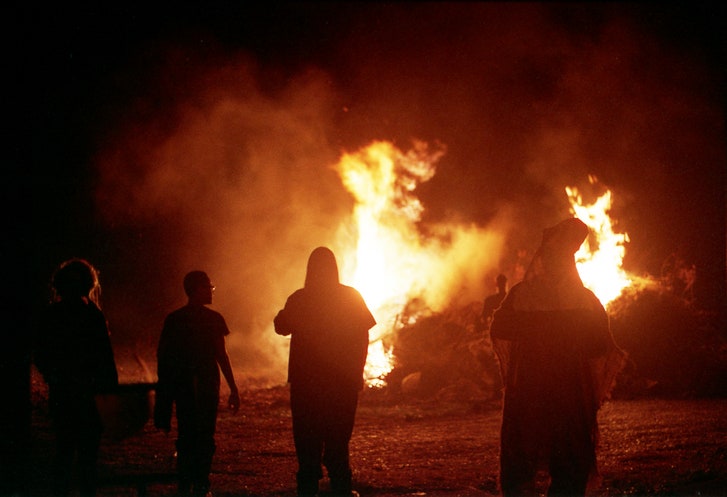
The first thing that drew me to the image was the contrast between light and dark caused by the fire. As I started to draw my sketch, I realized how difficult it is to capture proper shadowing. Along with that came the realization of how light and darkness give apparent focus to different aspects of an image. My eye seemed more disposed to light, so for me the most striking part was the fire. Afterwards I focused on the dark edges that border the smoke or the people who block out light. The way in which the smoke drifts out across the image creates a medium in between light and dark that is very compelling. The reason I think this image is considered art is for the intentional use of a poor filter in order to accentuate light, dark, and haze of smoke. The elements are natural but altered.


I chose this image as I was drawn to it due to it’s “realness.” The girl reminded me of myself, with my friends, taking pictures of fireworks on New Year’s Eve, Fourth of July, and many other holidays and events. I spent about 7 of my ten minutes trying to figure out how to draw those small specks of fireworks exploding in the sky. I only had a pencil so as I started to do the shading, it started to look weird. I started to draw and erase, draw and erase. Until finally, I was just too unhappy with it that I erased the whole thing and just drew the hexagonal shapes I saw in the the image. I then quickly rushed through drawing out the people but it really didn’t turn out that well. The blurriness of the image gives it movement that needs a very skilled hand to portray when drawing. The photo is beautifully composed and it seems as you are truly in the scene.
Image credit: “Adolescents photographing the fireworks on Fifth Street” in “Imperfect Portrait of Adolescence” by Eren Orbey. Photography by Colin Combs in The New Yorker.
When initially starting to turn my narrative into a comic, I found it useful to have the standardly written narrative. It enabled em to better plan how I wanted to make my panels, and it allowed me to further extrapolate my drawings that would accompany them. While writing, I also incorporated many styles from McCloud, Spiegelman, and Sacco. This, I deduced, would allow me to possibly select one in the end and apply that to my final draft. However, after the positive feedback I received for my comic, I may decide to keep the comic interesting with these multiple styles. Also, the comments I received appreciated my use of the “books”, and at the end the pencil, as people. I thought it was an interesting take. Additionally, the comments noted that I adequately used camera angles to show movement and different subjects. Perhaps what I am most proud of is how each comment adequately noted the theme and mood of my comic.


Drawing and writing a true story was not as hard as I thought it would be. I wasn’t sure at first what to draw, there a million-and-one conversations, places and people I could have drawn but not many of my experiences over break spoke to me on a deeper level. The day my Emory friends came over was a weird one and I had a nagging feeling the entire day of something being off and when they left I was able to pinpoint exactly what it was. I was a little undecided as to how to approach the whole comic but I think I draw more from Sacco’s style of large panels with less traditional structure and text which describes a feeling more than a statement of truth. I felt that the sites that we went to would only be done justice by the structure I chose and I also felt that it helped me portray how I felt and experienced the whole thing.

During class when we passed around the rough drafts of our Literacy Narrative’s I both received a lot of helpful feedback and absorbed aspects of other people’s comics that I might want to incorporate into my own. From the responses I got, it seemed to me that most people were able to understand the basic story and themes I was going for (which is pretty impressive because the sketch is admittedly pretty rough). A few things that people pointed out to me that I might want to change were the dialogue, which as of right now is lacking, perspective changes and most importantly, panel structure. I got a lot of criticism for having a cluttered and complicated panel structure. I understand the criticism and had a similar reaction myself when I looked back at what I had sketched after a day or two without looking at it. I think it would be a good idea to break up what I have now into smaller panels. This would make the story more organized and the visuals more manageable. From seeing other people’s comics I realized that it’s a good idea to follow their suggestions, so that will be the main thing I try to incorporate into my comic as well as the other suggestions made.


This class we passed around our first draft comics and received feedback on them. To say the least, it was an incredibly helpful process, since the feedback was taken seriously and has given me a new sense of direction with my comic. I was very glad that the feedback reflected the tone I intended to depict: lighthearted and comic.Something I noticed was that a student took the idea of my comic to be that the reading competition was wha t pushed me to read, when in reality was something tat pushed me away from reading (probably should make that more clear in my comic). Another very interesting suggestion was that I should introduce more angles and types of frame into my comic to make it more interesting; I had nought really thought of varying angles that much because of my poor drawing abilities, but since so much emphasis was given in this domain, I’ll try my best to introduce some variance into my comic’s angle of depiction.
Read my entire Tracing Maus project by following these links:
First annotation (Goodbye Richieu)
Second annotation (Auschwitz Map)
Image credit: “Thought bubble” by Ian Burt
Tracing helped me to view the concepts that we have been talking about in class. There was something different about actually tracing the pages as opposed to observing them passively. Going through the process of shading and sketching made me notice which parts of the process took the most time, and which panels were more detailed as opposed to the ones that seemed to take less time to trace.
I chose the pages that I did because I wanted to highlight the details in either body language and background or facial expression. I chose to trace p. 109 from Volume I and p. 25 from Volume II. After having read the books and having thought about which aspects stuck with me I chose pages that I thought best illustrated the concepts that I wanted to talk about. I chose to talk about:


The first tracing of Maus that I did resembles a moment that is truly devastating for both Vladeck and Art. The tone, emotion, and illustrations of my first trace all resemble the feeling of sadness and helplessness. Anja had just killed herself and Art feels like he will forever be stuck in prison because of his mom’s suicide. You can truly feel the instant regret that Artie had when he found out that his mom killed herself. It makes you feel that his life is over (as he portrays with the prison) and that he will never feel ok again in his life. This is a theme that carries on with the rest of book 1 when little by little the conditions that Vladeck is currently in, starts to become worse and worse. This feeling of hopelessness can be felt even in book 2 when Vladeck starts having more cases of life and death situations. But the contrast between my first trace and the second trace is that the second trace ends the trend of hopelessness and ends the book with a “they live happily ever after”. The second trace ends the story of how Vladeck was able to survive the war and be able to find out that his wife was still alive. I simply cannot imagine what that couple went through and how they felt when they finally saw each other after so many years of suffering apart. I truly believe that the author tried to give justice to his parent’s life by ending the story of their struggles with a very happy and emotional ending.
