Final Conference Sign Ups
You can sign up for your final conferences here.
ENG101.02. Spring 2018. Emory University

You can sign up for your final conferences here.
For the reflection on your literacy comic, I am most interested in you thinking about how it was different to write your literacy narrative as a comic — how did you think differently once the visual component was added?, how did that help you to see the story you were trying to tell in different terms?, was your analytical thinking process any different? How have your thoughts about your alphanumeric literacy narrative changed in the process of transforming it into a comic?
I’d also like you to discuss choices you made in creating your comic and try to explain why you chose the way you did. Especially if there’s something you were really trying to do in your comic which you felt you couldn’t realize as perfectly as you would if you had a lot more time, more resources, or if you could have hired an illustrator to turn your vision into exactly what you wanted. If there are aspects of your comic where you have a clear sense of what you were trying to accomplish and how you would have done so if some things were different, then explain that in your reflection. Doing so allows you to demonstrate that you have the knowledge you need about this sort of writing even if you have not yet developed all the skills necessary to make that knowledge visible in the final artifact you’ve produced.






I’m sorry that I cannot be with you all for our scheduled class on Thursday due to a family emergency. Stick to the assignment schedule — finish reading Palestine and start Pyongyang for class on Tuesday and work on your literacy narrative comics. Compose a true story in words and images of some sort and publish that to your site over the weekend.
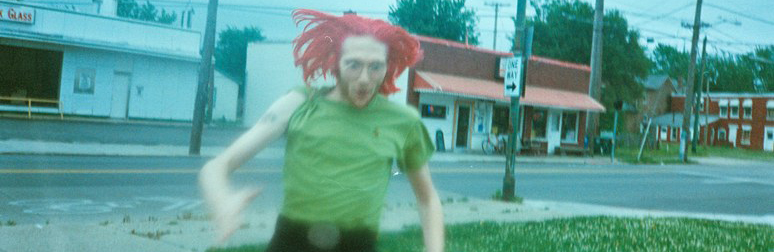
Since I can’t have you sketch at the start of class on Thursday, how about you just go ahead and do one on your own? Check out this brief article and accompanying photos in the New Yorker about Colin Combs, an eighteen-year-old photographer from Dayton, Ohio who uses “expired film and cheap or disposable cameras” to create “vivid, unvarnished stills” depicting himself and his friends “just trying to make art, have fun, and not feel like idiots.” Choose one of Combs’ photographs from the article and spend 10 minutes sketching your own version of the image (like we did in class previously). Scan or photograph your image and publish it in a post. Write a very brief reflection with the sketch: what drew you to the image you choose, what did you notice about it initially? What did you notice about the photograph as you spent time sketching it? These are photographs taken with cheap equipment, quick and on the fly, not carefully staged or ‘shopped — but there is something compelling about them. After sketching the image and letting your hand and eye engage with the photo in that manner, what do you think of it, what makes it art?
I’ll do my best to reply to emails between now and the end of the week, but I’ll be driving a lot and dealing with some heavy emotional stuff, so there will likely be more lag time before a reply than you are used to from me. But if you have questions about anything, don’t hesitate to email me about it — just be patient about getting a reply, please.
In class today, you read the draft comics from three of your peers and provided feedback to them both orally and on this sheet:
DownloadAt the end of class today, three different students in the class will hand you one of those feedback sheets and you will have had a conversation with them about your comic. As soon as is practical, please post the draft that you brought with you to class on your site (if you had a physical draft, scan or photograph it such that it’s legible and then upload it). Write a paragraph or two in which you summarize the feedback you got in class. You can quote from the sheets if that’s useful, but you don’t need to transcribe them wholesale — synthesize the responses to those questions plus whatever other useful feedback you got.
Note: Justin, Katherine, Kate, and Tony — since you weren’t in class today or didn’t have a draft with you, post your draft comics to your sites as soon as you can, then arrange with each other to meet (in person or asynchronously) and provide feedback to each other. You can download the form above and then fill out one for each of your peers.
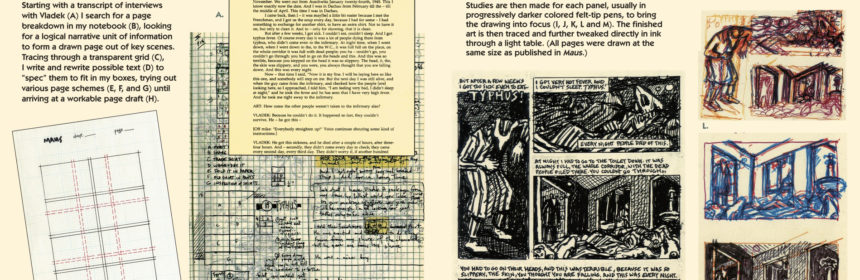
Remember, I extended the deadline for the Tracing Maus project — you need to have the pages published to your site by Saturday, March 10.
Once you have completed your Tracing Maus project and published the pages to your site, you need to publish a reflection post as well. The post serves to turn the project in when it syndicates to the class site, and is also an opportunity for you to explain your process in the work you just completed.
Your reflection post should link to the landing page for the project and should address the following questions:
| 3/4 | Sketch 6: What’s in your bag? | ||
| 8 | 3/6 | Palestine, chapters 1 & 2 (1-50) |
|
| 3/8 | Palestine, chapters 3 (51-77) | Tracing Maus |
There’s a lot going on this week as we go out into spring break with a bang. As you begin to read Palestine, you will also be finishing up your Tracing Maus project and working on the literacy narrative comic draft/storyboard that we’ll be workshopping right after we return from break.
In class on Tuesday, we’ll start off with clearing up any questions you might still have about the Tracing Maus projects and then probably spend a few minutes discussing the final chapter of the book, since group work on Thursday meant we didn’t really get to talk about it directly. We’ll also begin to discuss Palestine, focusing on (the first 2 chapters, at least) differ from or are similar to what we read from Spiegelman:
Once you post the “What’s in your bag?” sketch, you won’t have another sketch due until March 25. That assignment will ask you to combine two photos, putting a person from one photo into a place from another one, so if you travel or go home over spring break and you get a chance to either take photos or look through family photo albums, you might keep an eye out for images that would be fun to play with.
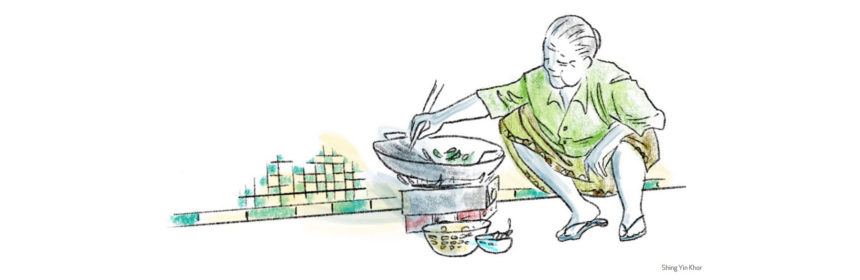
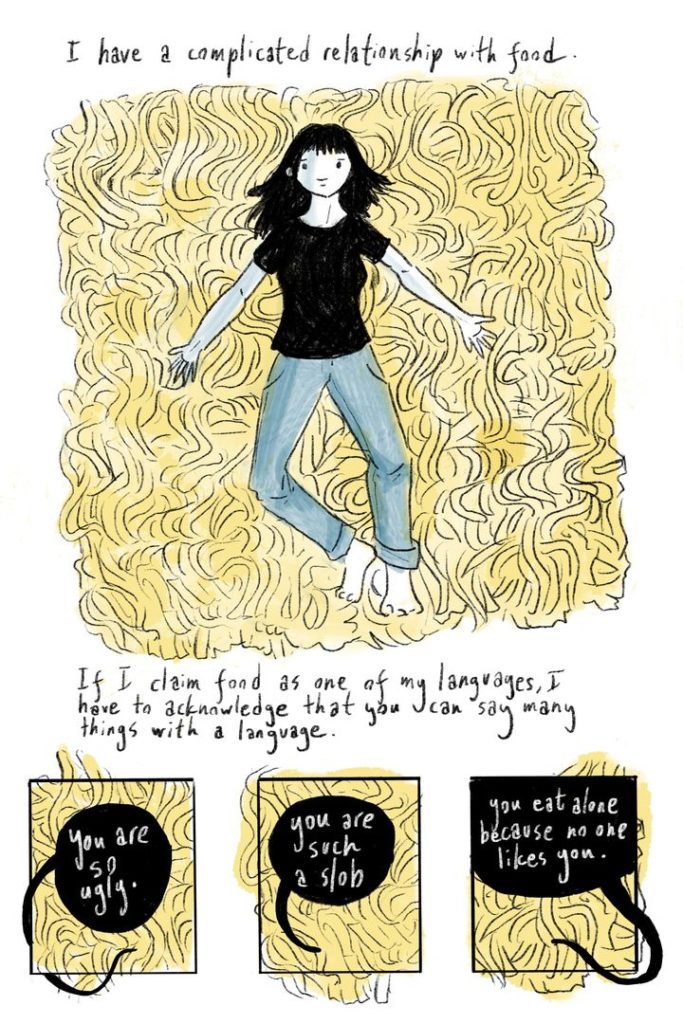 As you work on your literacy narrative comics, I thought you might find interesting this comic that was just published this week “Say It with Noodles: A Comic about Food and Language” by Shing Yin Khor which is subtitled “I have forgotten how to speak two languages. But I have learned this one.”
From the in-class group work today:
The image you sketched today appeared in this article in the Guardian from last month. Philippe Chancel took photos documenting multiracial street gangs in 1982 Paris.
Also: one of you left your copy of Maus Book 2 in the classroom. I don’t see a name in it, but email me and/or come by my office to pick it up if it belongs to you.
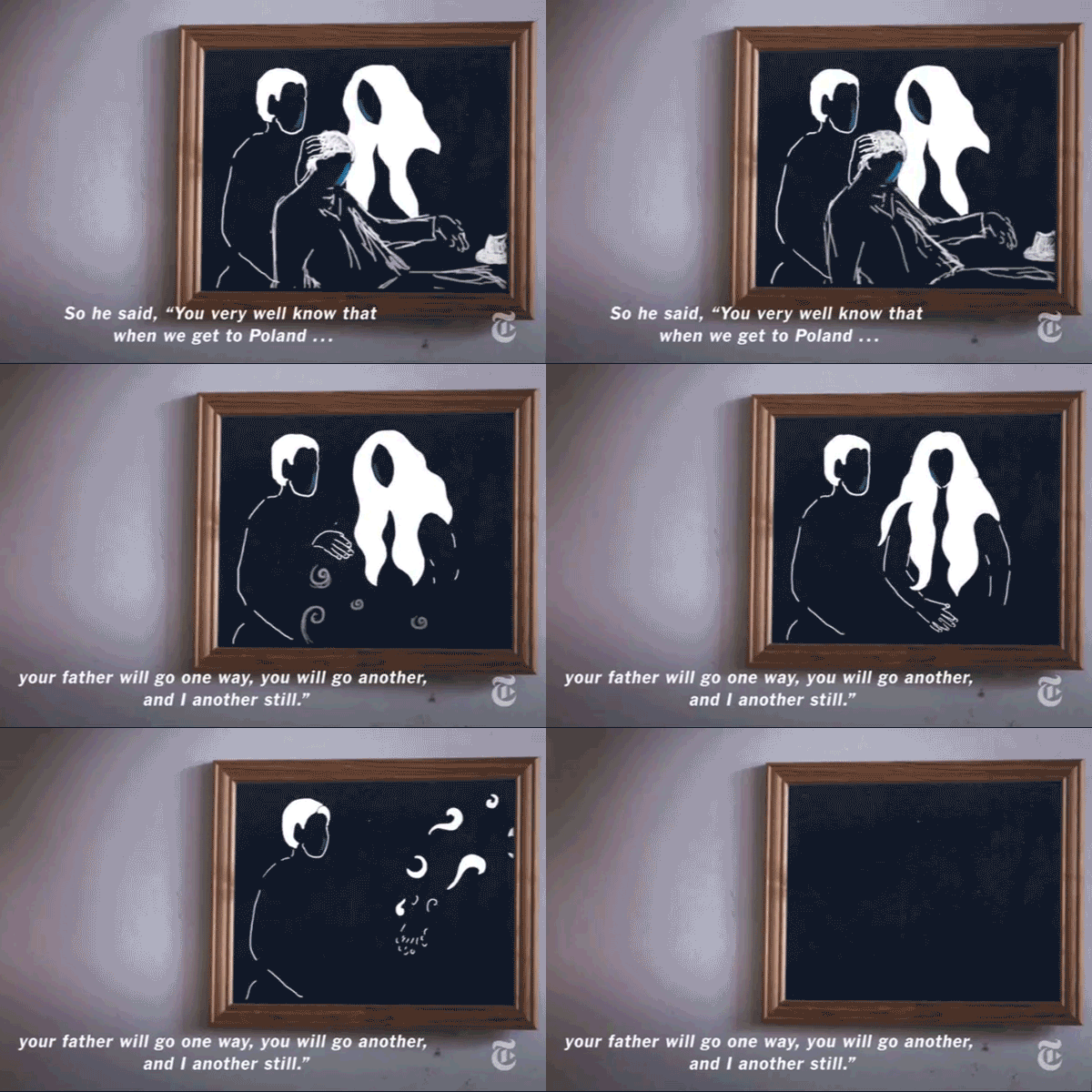
Klara Prowisor, now 92 and living in Tel Aviv, escaped the gas chamber at Auschwitz by leaving her sick father behind as she jumped from a train in Belgium. Two decades later, she received a message from him. This 13-minute story is haunting and incredibly powerful.
Matan Rochliz interviewed Prowisor and created this short documentary film of her story for the New York Times, as part of their relatively new feature called “Op-Docs“:
Op-Docs is a series of short, interactive, and virtual reality documentaries. Each film is produced with wide creative latitude by both renowned and emerging filmmakers, and premieres across Times online platforms. The goal of each Op-Doc is to present a unique point of view.
The list of Op-Docs projects spans an impressive range of subjects and methods.
